Commentary: Ungovernable billionaires may be our biggest global threat
Published in Op Eds
Suddenly, artificial intelligence is everywhere we look. Three years ago, I had no exposure to it personally, but now it tries to auto-populate my emails, shows up at the top of my online searches and answers my consumer queries (or tries to, at least).
Any new disruptive technology comes with costs and benefits and growing pains, but AI seems uniquely unpopular for a new tool with so much promise. A recent public opinion survey by the Pew Research Center found that half of American adults find AI more concerning than exciting.
The concern is well-founded. AI poses great risks to our economy and planet. Some AI tech leaders have sounded the alarm about its potential to cause mass unemployment at levels that could devastate economies. Some experts even fear that AI could ultimately wipe out humanity. Government-sponsored studies have been unable to rule out that possibility. These risks are only growing as the next generation of generative AI emerges, which not only processes mass amounts of data but also can create new content from it.
The world has faced disruptive technologies before, navigated the transition and come out better off on the other side, so what makes AI feel so different?
Some will attribute it to how powerful AI is and its potential to replace human productivity. But the cotton gin, carriage, car and computer all promised to do previously human tasks at faster speed. Each disrupted the societies built around them too.
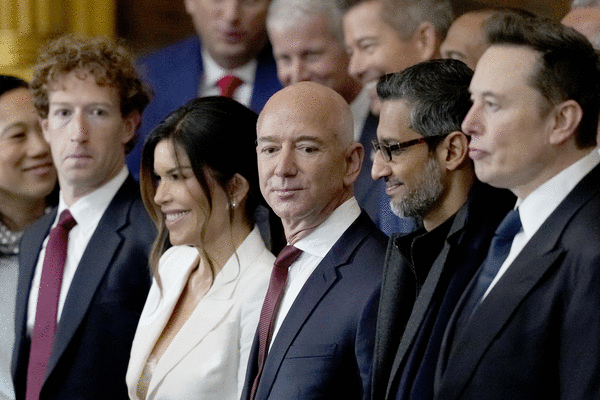
The biggest threat of AI is that the bulk of this powerful technology is uniquely within the control of a small cohort of ungovernable men.
Though this is a technology of global importance, the most consequential players so far lead U.S.-based businesses, building off the tech-leading legacy of Silicon Valley. This means their control of a corrupted American political system will have ramifications worldwide.
Money has always played a big role in U.S. politics, but since the 2010 Supreme Court decision in Citizens United v. Federal Election Commission, the sheer amount funneled into candidates and their governance agendas has become grotesque. Political spending by billionaires has increased more than 160-fold. In 2008, before Citizens United, outside spending on presidential campaigns totaled $574 million. By 2024, it had reached $4.5 billion, increasing nearly eightfold in 14 years.
That political spending has paid off. Look no further than the tax code, under which the world’s wealthiest men and America’s most profitable corporations pay nothing or next to nothing in taxes. Having bought their preferred tax system, they have even more money to pour back into politics to ensure the rest of government policy profits them too. Meanwhile, the rest of America is getting poorer as inequality, here and around the world, explodes.
If you doubt the overwhelming influence of billionaires on policy, consider that Democratic California Gov. Gavin Newsom vowed to defeat the popular one-time billionaire tax after Google co-founder Sergey Brin argued with him about it at a holiday party last year. Brin apparently threw a fit because that tax would leave him with only some $250 billion to live on. The ultrawealthy clearly have strong pull on both sides of the aisle.
It is no coincidence that the fortunes of ultrawealthy Americans have increased exponentially in recent years. Elon Musk controls X, Tesla and SpaceX and comes in at a net worth of $778 billion. Jeff Bezos owns Amazon and comes in at $268 billion. Mark Zuckerberg of Meta is worth $230 billion. Larry Ellison of Oracle is worth $210 billion. All of them, including Brin, are among the top 10 wealthiest people on earth. All are pouring billions into AI projects in an attempt to win the race to super intelligence and, with it, even greater power.
Though some of these men were once strong advocates of liberal democracy, they all appear to have developed a distinct taste for authoritarianism. They do not believe the rules that govern other people apply to them, and their ultrawealth means the rules rarely do.
If this technology is on track to become as powerful as they believe it is — as demonstrated by their massive investments in it — the world cannot allow them to wield it without limit. To ensure this new technology is safe for the public, and to mitigate the inevitable economic ruptures, the government needs to step in and regulate it in the public interest. Governments should have learned this lesson from social media platforms, which were allowed to proliferate not only absent regulation but also explicitly protected from liability under U.S. law (thanks to their heavily funded lobbying). As a result, the U.S.-based companies that led the industry had no incentive to protect the public (including children) from the risks and dangers of their products that they were well aware of.
And yet the current administration appears poised to not regulate this technology at all, since the ultrawealthy men who control it don’t want them to.
As James Madison wrote in “The Federalist Papers” in 1787, “If men were angels, no government would be necessary.” These men are not angels, nor is the technology they are creating. If this new technology and its leaders remain ungoverned and unaccountable, we’re far more likely to fall prey to AI’s worst-case scenarios.
____
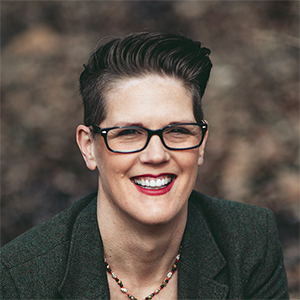
Elizabeth Shackelford is a senior adviser with the Institute for Global Affairs at Eurasia Group and a foreign affairs columnist for the Chicago Tribune. She is also a distinguished lecturer with the Dickey Center at Dartmouth College. She was previously a U.S. diplomat and is the author of “The Dissent Channel: American Diplomacy in a Dishonest Age.”
___
©2026 Chicago Tribune. Visit at chicagotribune.com. Distributed by Tribune Content Agency, LLC.
































Comments